When it comes to indoor air quality, not all vacuum filters are created equal. Many products advertise “HEPA” filtration, but the difference between HEPA-Type and True HEPA filters can make a big impact on the air your family breathes.
What Does HEPA Mean?
HEPA stands for High Efficiency Particulate Air. It’s a filtration standard originally developed for medical and scientific environments. A filter must meet strict requirements to earn the label True HEPA.
HEPA-Type Filters
Filters that look and sound like HEPA but don’t meet official HEPA standards.
Typically trap particles 2 microns or larger, missing many allergens, smoke, and bacteria.
Often labeled “HEPA-Type” or “99% efficient,” but not certified.
Larger dust is caught, but tiny allergens still circulate through your home.

True HEPA Filters
- Certified filters that capture 99.97% of particles as small as 0.3 microns.
- Removes dust mites, pet dander, pollen, smoke, mold spores, and bacteria.
- Cleaner air, fewer allergens, healthier breathing environment.
- The same filtration level used in hospitals and clean rooms.
| QUICK COMPARISON | HEPA-TYPE | CENTRAL VACUUM (VENTED OUTSIDE) |
|---|---|---|
| True HEPA 99.97% @ | Not certified | 100% of dust & allergens removed |
| 0.3µm Nearly all captured | Many escape | All expelled outdoors |
| Captures fine particles | Misses most | Fully removed |
| Replace filters | Replace filters often | No filter maintenance indoors |
Central Vacuum Advantage
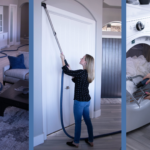
Even the best portable vacuums with TrueHEPA filters eventually need replacements and still allow a few microscopic particles to escape. But with a central vacuum vented outdoors, 100% of dust, allergens, and microscopic particles are removed from the living space. No filters to clog, no recirculated allergens — just a cleaner, healthier home.
Bottom Line: If you want healthier air and the best filtration, choose True HEPA over HEPA-Type — but for the ultimate clean air solution, a Hide-A-Hose Central Vacuum vented outdoors removes 100% of dust and allergens.